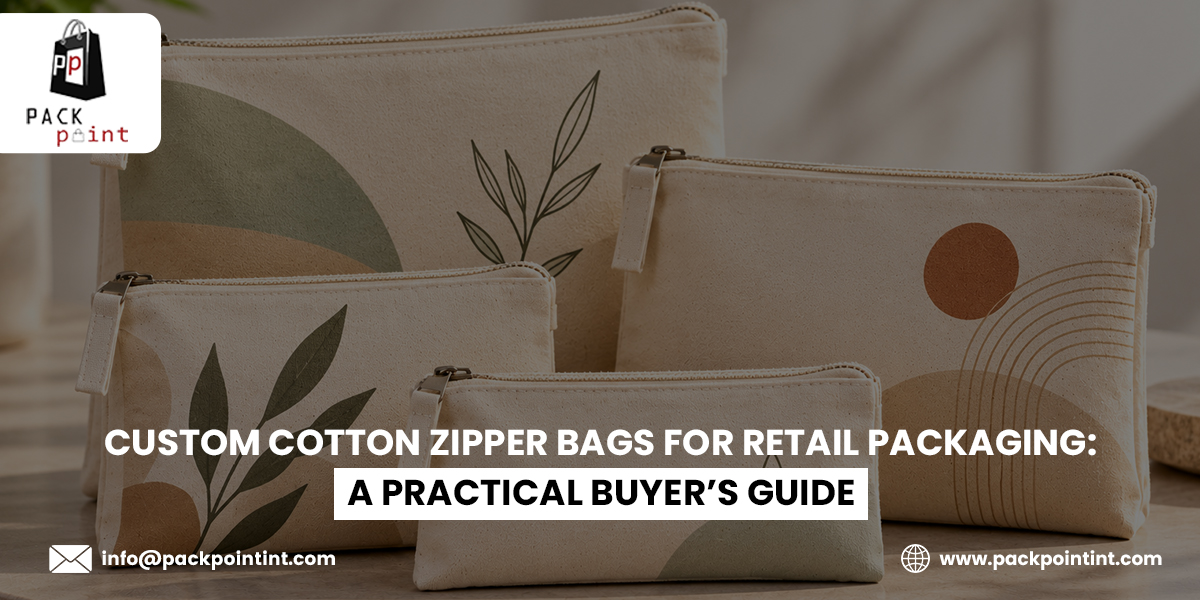
Retail packaging affects how customers handle products and perceive a brand. Cotton zipper bags provide a reusable option for clothing accessories, cosmetic tools, jewelry, gifts, and lifestyle merchandise. Their secure closures and customizable surfaces suit businesses that want practical packaging with a consistent brand identity.
Before ordering, consider fabric quality, bag dimensions, construction, printing, and production requirements. These details help you select packaging that fits your products and budget.
Table of Contents
ToggleWhy Choose Custom Cotton Zipper Bags?
Custom packaging bags protect merchandise and give customers a useful storage accessory. Cotton zipper bags suit products that need to stay contained after purchase. The zipper allows repeated access, while the fabric offers a softer finish than rigid packaging.
Retailers use these bags for small apparel items, beauty accessories, travel products, stationery, and gift sets. Cotton isn’t waterproof, however, so moisture-sensitive products may need extra protective packaging.
Reusability and Customer Experience
Customers reuse cotton bags to organize accessories, store travel essentials, and keep smaller products together. Every reuse puts your logo back in view, although how often that happens depends on bag quality and customer habits.
Cotton also supports different branding styles, including simple logos, colorful graphics, and product information. Businesses should make environmental claims carefully because cultivation, manufacturing, transportation, washing, and product lifespan all affect environmental performance.
1. Choosing the Right Cotton Fabric
Fabric weight affects appearance, flexibility, and durability. Ask the supplier for the fabric composition and weight, which suppliers usually state in grams per square meter (GSM). The right specification depends on the bag’s dimensions and intended contents.
Lightweight Cotton
Lightweight cotton suits small accessories, promotional merchandise, and products that require minimal packaging. These bags fold easily and generally need less storage space.
Thin fabric offers limited structure, though. Test the seams and material before approving an order, especially if customers will reuse the bags frequently.
Medium-Weight Cotton
Medium-weight cotton balances flexibility and structure. It can suit cosmetics accessories, stationery, small gift sets, and clothing accessories.
When sourcing cotton bags for packaging, request a physical sample to assess fabric feel, stitching, and suitability for the intended product. GSM alone does not determine strength because weave and construction also matter.
Heavyweight Cotton and Canvas
Heavyweight cotton or cotton canvas may suit premium merchandise and products that benefit from a sturdier finish. Canvas is generally a heavier woven fabric, although its composition and performance vary by specification.
Heavier materials can increase manufacturing and shipping costs. Choose them when the intended use justifies the additional structure.
2. Selecting Suitable Bag Sizes
Correct dimensions help products fit securely and allow customers to remove and return items easily. Measure the merchandise after accounting for inserts, protective wrapping, and accessories.
Small Bags for Compact Products
Small bags work well for jewelry, charging accessories, cosmetic tools, and individual gifts. Check the usable interior space because seams and zipper construction can reduce capacity.
Medium Bags for Everyday Retail Items
Medium bags can accommodate skincare accessories, folded apparel items, stationery, and compact lifestyle products. If the package contains several items, test the complete arrangement before approving the dimensions.
Large Bags for Product Bundles
Large bags suit gift collections, travel accessories, and clothing sets. Depending on the load, they may require reinforced seams, wider gussets, or stronger zippers.
Retail application | Features to consider |
Jewelry and accessories | Compact size, neat seams, smooth zipper |
Cosmetics and skincare | Suitable capacity, optional lining |
Apparel accessories | Flexible fabric, generous opening |
Gift bundles | Larger dimensions, reinforced construction |
Premium merchandise | Heavier fabric, refined finishing |
Custom Dimensions
Standard sizes simplify ordering, but custom dimensions improve the fit for unusual products. Ask the supplier for a dimensioned drawing or sample, and confirm how they take measurements.
Need a cotton zipper bag built around your product? Share your dimensions, preferred fabric weight, closure style, and quantity with Pack Point International, and the team will return a formal quotation before production starts.
3. Checking Zippers and Construction
An attractive bag still needs reliable components. Poor stitching or a weak zipper can reduce its usefulness and create problems for retailers.
Zipper Quality
Open and close the zipper repeatedly during sample testing. Check for snagging, uneven movement, exposed teeth, and gaps near the ends. Metal and plastic zippers offer different appearances and handling characteristics, so choose one that suits the product and budget.
Stitching and Reinforcement
Inspect seams, corners, fabric edges, and handle attachments where applicable. Loose threads, skipped stitches, and uneven seams may indicate inconsistent construction.
For heavier contents, request details about reinforcement and test a sample with a representative load. Do not assume a bag designed for lightweight accessories can safely carry heavier products.
Optional Lining
A lining gives the bag a smoother interior and separates merchandise from the outer fabric. It lifts the presentation of premium products, but it also adds material and production complexity. Add one only when the product calls for it.
4. Branding Options for Custom Printed Zipper Bags
Branded cotton bags can support consistent presentation across retail packaging, promotional materials, and gift collections. The branding method should complement the fabric and keep important details readable.
Screen and Digital Printing
Screen printing can suit relatively simple designs with a limited number of colors. Digital printing may work for detailed artwork, depending on the fabric and supplier’s capabilities.
For custom printed zipper bags, ask the supplier to confirm print quality, available colors, setup costs, and minimum quantities. Request a sample before placing a large order.
Embroidery and Woven Labels
Embroidery adds texture, while woven labels provide a discreet branding detail. Both options can suit businesses seeking a distinctive finish, but they may increase production costs.
Logo Placement and Artwork
A centered logo creates a clear focal point, while smaller placement may suit understated packaging. Provide high-resolution artwork and confirm print dimensions, colors, and positioning. Approve the final mockup before production.
5. Ordering and Budgeting for Wholesale Packaging
Compare complete specifications instead of selecting a supplier on unit price alone.
Compare Quotations
Ask for pricing based on the same fabric weight, dimensions, zipper, printing method, and packaging requirements. Confirm minimum order quantities, sample fees, setup charges, shipping, payment terms, and production lead times.
Plan Order Quantities
Estimate demand using expected sales, seasonal activity, and available storage. A larger order may reduce the unit price but can tie up money in unused packaging.
Set Quality Standards
Document the approved sample, dimensions, fabric specification, print placement, and acceptable quality standards. Ask how the supplier checks finished products and handles defects.
Want to compare options with a cotton bags manufacturer that keeps you updated at every stage? Pack Point International works with a minimum order of 500 units per style and provides a free sample once you agree on a quotation.
What are cotton zipper bags used for?
Retailers use them to package jewelry, cosmetics accessories, clothing accessories, stationery, gifts, and other compact products. The zipper keeps contents together and supports repeated use.
What should you consider when choosing cotton zipper bags for retail packaging?
Consider dimensions, fabric weight, zipper quality, stitching, lining, branding, order quantity, and total cost. Test a sample with the intended contents.
What sizes are available for custom cotton zipper bags?
Suppliers may offer small pouches, medium accessory bags, and larger packaging bags. Custom dimensions may be available for products that do not fit standard sizes.
Can cotton zipper bags be customized with a logo?
Yes. Options may include screen printing, digital printing, embroidery, and woven labels. Availability and cost depend on the artwork, fabric, and order quantity.
Are cotton zipper bags suitable for bulk retail packaging?
Yes, provided the material and construction meet product requirements. Approve a sample, establish quality standards, and confirm the production schedule before ordering.
Final Thoughts
Custom cotton zipper bags combine practical packaging with reusable functionality and clear brand presentation. Choosing suitable fabric, dimensions, zippers, and printing methods helps retailers avoid unnecessary costs and meet product requirements. Careful sampling and documented specifications also keep bulk orders consistent.
Ready to plan your next packaging order? Send your specifications to Pack Point International for a formal quotation and sample timeline.