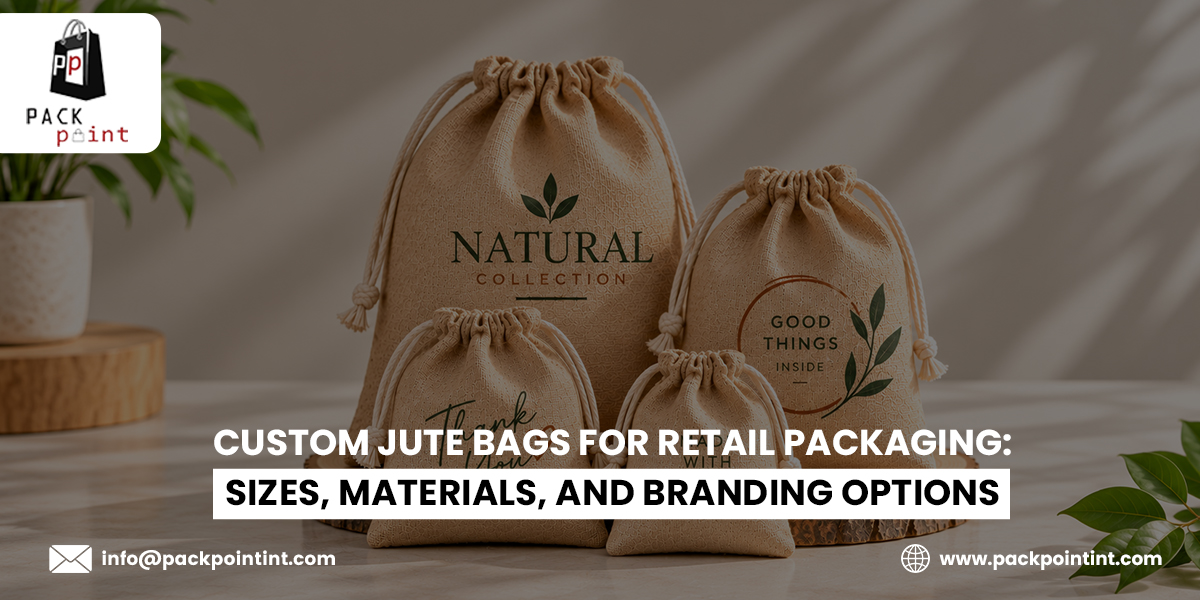
Retail packaging does more than carry a purchase. It protects products, builds brand recognition, and encourages customers to reuse the packaging after leaving the store. Jute bags offer a practical option for retailers seeking a natural-looking alternative to disposable bags.
Not every jute bag suits every product, however. Material construction, dimensions, handle strength, and branding methods all affect how a bag performs. Understanding these factors helps businesses choose packaging that fits their products, customers, and budget.
Table of Contents
ToggleWhy Choose Jute Bags for Retail Packaging?
Jute is a natural plant fiber that manufacturers turn into bags, sacks, and textiles. Its distinctive texture suits packaging for clothing, gifts, accessories, specialty foods, and promotional items. Reusable jute bags also deliver value beyond the initial purchase. Customers reuse them for shopping, storage, and daily errands, which keeps your logo in view long after checkout. How often they do so depends on the bag’s construction and how well it holds up.
Jute also has drawbacks worth weighing. Standard jute feels coarse and may shed fibers, unlaminated fabric absorbs moisture, and laminated versions raise disposal concerns. Businesses considering eco-friendly jute bags should review the full product specification, including coatings, dyes, handles, printing, and packaging. A bag’s environmental impact depends on more than its fiber, because reuse, durability, sourcing, and disposal all play a part.
Jute bags work best when their look complements the product and the bag can handle its intended load. They suit items less well when those items need a sealed, moisture-resistant, or easy-to-clean container.
Understanding Jute Bag Materials
Material specifications influence a bag’s appearance, structure, and performance. Before placing an order, ask the supplier which fabric and construction the quote includes.
Natural, Unlaminated Jute
Unlaminated jute retains its textured, natural appearance. It suits general retail shopping bags, gift packaging, and merchandise where a rustic finish supports the brand identity.
The fabric’s texture can affect printing, particularly when artwork contains fine lines or small text. Request a sample or printed proof before approving a large production run.
Laminated Jute
Laminated jute has an extra coating layer that improves structure and adds some moisture resistance. This finish helps a bag hold its shape and gives certain printing methods a smoother surface to work with.
Lamination does change the material composition, though, and it can affect recyclability. Confirm the exact lining or laminate, cleaning instructions, and disposal guidance instead of assuming all laminated bags share the same properties.
Lined and Reinforced Options
Some bags include an inner lining, reinforced base, or additional stitching. These features make a bag better suited to specific products, but they also raise its price.
A simple design often covers clothing and accessories. Heavier merchandise calls for a reinforced base and stronger handles. Ask the supplier to confirm the load capacity rather than judging by fabric thickness alone.
Choosing the Right Bag Size
The correct dimensions depend on the products the bag must carry. A bag that is too small can damage packaging or make items difficult to remove. An oversized design wastes material and adds to shipping and storage costs.
Consider these common size categories when comparing jute packaging bags:
- Small: Suitable for jewelry boxes, small gifts, cosmetics, and compact accessories.
- Medium: Works for clothing, books, packaged gifts, and several smaller purchases.
- Large: Better suited to multiple products, larger retail purchases, or promotional merchandise.
These are general categories, not universal measurements. Suppliers use different dimensions, gusset depths, and handle lengths, so request exact specifications before approving an order.
Bag size | Common applications | Key consideration |
Small | Accessories, cosmetics, small gifts | Check product dimensions and opening width |
Medium | Clothing, books, gift sets | Allow space for easy packing and removal |
Large | Multiple purchases, merchandise | Confirm base strength and handle capacity |
Custom dimensions make sense when standard sizes don’t fit your product range. Measure the packaged product, including any box or protective wrapping, and leave enough room to place and remove it comfortably.
A gusset adds depth and makes a bag better suited to boxed or bulky items. Ask the supplier to list width, height, and gusset measurements separately so you know the exact finished dimensions.
Retailers weighing jute tote bags against cotton and canvas alternatives can talk to Pack Point International about dimensions, fabric weights, and branding before production begins.
Handles, Stitching, and Construction
A bag’s appearance matters, but its construction determines how well it performs during everyday use. Handle attachment, seams, and the base should match the expected contents and carrying conditions.
Common handle options include jute, cotton webbing, and other textiles. Short handles suit hand carrying, while longer handles let customers sling the bag over a shoulder. Choose the length based on how your customers will actually carry it.
Check the following details before approving a sample:
- Handle attachment: Look for secure stitching and reinforcement at stress points.
- Seams: Check for loose threads, uneven stitching, and weak joins.
- Base construction: Confirm that the bottom can support the intended products.
- Finishing: Review the edges, lining, and overall consistency.
- Load testing: Ask the supplier how they test the bag and confirm the recommended carrying limit.
Testing a sample with your actual products reveals problems that photographs hide. Don’t assume two bags with similar dimensions offer the same strength.
Branding Options for Custom Jute Bags
Branding can turn packaging into a recognizable part of the retail experience. The best method depends on the artwork, fabric texture, number of colors, and production budget.
Screen Printing
Screen printing works well for bold logos, simple illustrations, and designs with only a few colors. Jute’s coarse weave can blur very fine details, so keep the artwork suited to the material.
Multicolor Printing
More detailed artwork may need a different printing approach or a smoother laminated surface. Ask for a physical sample or production proof to check color accuracy and readability before approving the full quantity.
Woven Labels and Logo Placement
Woven labels offer an alternative when a retailer wants a smaller branded detail. Logo placement also affects visibility and appearance. Centered logos give a classic retail look, while smaller corner placements create a more understated design.
Keep artwork legible at the intended print size. Confirm the logo dimensions, colors, placement, and any minimum line thickness in writing to reduce production errors.
Ordering Jute Bags in Bulk
Ordering jute bags in bulk helps retailers keep packaging consistent across locations and campaigns. The lowest unit price doesn’t always deliver the best value, though. Material quality, printing, packaging, shipping, and production tolerances all shape the final cost.
Before requesting quotations, prepare a clear specification that includes:
- Bag dimensions, gusset, and handle length.
- Fabric type, lining, or laminate.
- Logo artwork, colors, and placement.
- Required quantity and delivery deadline.
- Packaging, sample approval, and quality expectations.
Compare quotations using the same specifications. Ask about setup charges, sample costs, minimum order quantities, lead times, and how the supplier handles defective items. Check that the quotation covers delivery and individual packaging.
Approve a pre-production sample wherever possible. Check its dimensions, stitching, print quality, and finish against the agreed specification. For repeat orders, keep the approved sample and artwork files on hand so every batch matches.
Seasonal campaigns and product launches need extra planning. Allow time for artwork approval, sample revisions, production, and shipping. Ordering early removes the pressure to accept an unsuitable design just to meet a deadline.
Final Order Checklist
Before confirming production, make sure you have:
- Confirmed the bag’s purpose and expected load.
- Approved the size, material, handles, and finish.
- Checked the logo proof and placement.
- Reviewed a physical sample where available.
- Agreed on quantity, cost, delivery date, and quality standards.
Why are jute bags suitable for retail packaging?
Jute bags have a distinctive natural texture, and customers can reuse them for shopping, storage, and carrying merchandise. Their suitability depends on the product, the bag’s construction, and how much moisture protection the contents need.
What sizes are available for custom jute bags?
Common options include small bags for accessories and gifts, medium bags for clothing and gift sets, and larger designs for boxed products and multiple purchases. Many suppliers also offer custom dimensions, depending on order quantity.
How do businesses customize jute bags with their branding?
Common options include screen printing, multicolor artwork, and woven labels. The right method depends on the logo, fabric surface, desired finish, and production budget.
Are jute bags suitable for bulk retail packaging?
Yes. Bulk orders can support consistent packaging across stores and campaigns. Businesses should compare specifications, sample quality, production timelines, and total costs before committing.
What should businesses consider when ordering custom jute bags?
Review the intended use, dimensions, fabric construction, handles, branding, order quantity, and delivery schedule. Approving a sample helps you catch issues before full production.
Final Thoughts
Custom jute tote bags give retail packaging a distinctive look and hand customers a reusable carrying option. The right fabric, size, handles, and branding method make sure the bag meets practical needs as well as visual expectations. Clear specifications and sample approval matter most when comparing suppliers, and careful planning leads to packaging that supports your products, brand presentation, and budget.
Pack Point International manufactures custom bags for business in cotton, canvas, and muslin, with a minimum order of 500 units per style and a free sample once you agree on a quotation. Share your specifications, and the team will come back with a formal quote.